The Arsenal Report

soldier carrying a sten mark ii machine gun

The Denix STEN Mark II Non-Firing Replica: A De...

Introduction The Sten submachine gun stands as a testament to wartime ingenuity, symbolizing the resourcefulness of British forces during World War II. Its simplistic design and mass production not only...

The Denix STEN Mark II Non-Firing Replica: A Deep Dive into History and Craftsmanship

Introduction The Sten submachine gun stands as a testament to wartime ingenuity, symbolizing the resourcefulness of British forces during World War II. Its simplistic design and mass production not only equipped soldiers but also found its way into the hands of resistance fighters across Europe. Today, Denix offers enthusiasts a chance to own a piece of this history through their meticulously crafted non-firing replica. This review delves into the storied past of Sten Mark II and evaluates the authenticity and quality of Denix’s reproduction. Part 1: The History of the Original Sten Mark II The Origins In 1940, facing the aftermath of the Dunkirk evacuation, Britain grappled with a dire shortage of firearms. The urgent need for a cost-effective and rapidly producible submachine gun led to the development of the Sten. Designed by Major Reginald V. Shepherd and Harold J. Turpin at the Royal Small Arms Factory in Enfield, the Sten’s name combines the initials of its designers and the factory: Shepherd, Turpin, and Enfield. Design and Production The Sten Mark II emerged as the most prolific variant, with over two million units produced during the war. Its design prioritized simplicity: constructed mainly from stamped metal parts, it featured a side-mounted 32-round magazine, a basic tubular stock, and minimal moving parts. The Sten could be manufactured cheaply and quickly, often by factories without prior experience in arms production. Manufacturers included the Long Branch Arsenal in Canada, which produced over 134,000 units, and even small workshops across the UK. Notably, the Sten was partly inspired by the German MP28 and other contemporary designs, further emphasizing practicality over sophistication. Operational Use The Sten Mark II was deployed extensively by British, Commonwealth, and Allied forces from 1941 onward. It was a staple weapon for paratroopers, commandos, and most famously, European resistance groups who valued it for its ease of concealment and lightweight design. However, soldiers often criticized the Sten for its reliability issues. Early models had a reputation for accidental discharges if dropped, and the magazine feed could be finicky. One infamous event was the 1942 assassination attempt on Reinhard Heydrich, where a misfire of a Sten gun played a part. Despite its flaws, the Sten became a critical tool in urban warfare and clandestine operations throughout the war. Legacy of the STEN The Sten’s influence extended well beyond WWII. It continued to see use during the Korean War, various colonial conflicts, and by guerilla forces worldwide into the 1960s. Its basic design philosophy influenced later submachine guns, notably the Sterling SMG, which gradually replaced it in British service starting in 1953. More than just a weapon, the Sten became a symbol of resilience and the spirit of resistance against tyranny. __________________________________________ Part 2: Denix and Their Mission About Denix Founded in 1967 in Menorca, Spain, Denix has specialized in high-quality, historically accurate non-firing replicas. Their products cater to collectors, museums, reenactors, and filmmakers looking for detailed recreations without the complications of owning functional firearms. Denix has earned a reputation for excellent craftsmanship, historical fidelity, and durable design. Crafting History: The Philosophy Behind Denix Replicas Denix focuses on creating replicas that are visually and tactilely faithful to the originals. Every detail, from dimensions to mechanical parts, is considered, even though the replicas are entirely non-functional. By offering legal, safe alternatives to real firearms, Denix allows history enthusiasts to enjoy and preserve the legacy of iconic weapons. ____________________________________________________________ Part 3: The Denix STEN Mark II Replica: First Impressions Unboxing Experience The Denix STEN arrives securely packaged and surrounded by sturdy materials to prevent damage during shipment. Upon opening, the first impression is sheer authenticity: the weight, size, and build all immediately feel "right." The initial handling experience evokes a sense of respect for the wartime soldiers who once carried the original. Build Quality The replica is made almost entirely of metal, mimicking the real STEN’s rugged construction. The stock, receiver, barrel shroud, and magazine are all faithfully replicated in metal, giving it a realistic weight of approximately 7 pounds (3.2 kg). There are no visible plastic parts, and the slight imperfections in the finish replicate the crude production quality of the originals - an intentional design choice. Attention to Detail Denix’s STEN captures even minor features: the perforated barrel shroud, the minimalist iron sights, the welded joins, and the famous side-mounted magazine are all carefully crafted. Functional features include a working bolt (pulls back and locks), a removable magazine, trigger movement, and a removable stock. While the replica cannot chamber a round, the operation of these parts enhances the realism. __________________________________ Part 4: Hands-On Review Handling and Feel Handling the Denix STEN offers an authentic experience. The side-mounted magazine requires some getting used to, especially when aiming, but this is historically accurate. The skeletal stock, although minimalist, feels surprisingly sturdy when shouldered. The replica’s balance is spot-on, and dry handling exercises (like aiming and "firing" motions) feel natural. Durability and Display Value Denix uses durable materials, making the replica resilient to regular handling. Though it’s not meant for intense field use, the STEN replica is ideal for display, educational purposes, or light reenactment. Its robust construction ensures that, with proper care, it will last for decades. Comparison to Other Replicas Compared to other brands, Denix consistently delivers superior metalwork and more accurate functional details. Many cheaper replicas suffer from loose fittings or incorrect proportions such problems are not present in the Denix versions. The Denix STEN stands out as a top-tier choice for serious collectors. _____________________________ Part 5: Practical Uses Home Decor and Display The Denix STEN looks incredible mounted on a wall or showcased in a shadow box. Paired with WWII medals, maps, or uniforms, it creates a striking display. Display tips: Use wall-mounted brackets or horizontal shelves Consider vintage signage or wartime posters as a backdrop Install subtle lighting to enhance its presence. Reenactment and Cosplay For WWII reenactors, the Denix STEN provides an authentic look without the logistical and legal complications of a working firearm. It’s lightweight enough for hours of carrying during events and detailed enough for close-up photographs. Film and Theatre Props Filmmakers and theatrical productions often use Denix replicas due to their realism. The Denix STEN can easily pass for a real submachine gun on camera, reducing safety risks during filming. _______________________________________ Part 6: Legal Considerations Is It Legal to Own? In most jurisdictions, non-firing replicas like the Denix STEN are legal to own. However, some areas (such as certain U.S. states, Canada, and Australia) have regulations regarding replicas that closely resemble real firearms. (Please visit our shipping restrictions page for additional information on shipping within the United States) Tips for compliance: Always check your local and national laws before purchasing. Transport replicas in a case or container. Clearly label replicas as non-functional if displaying them publicly. Denix replicas feature an orange barrel plug to identify them as non-firing, aiding in legal compliance. ___________________________ Part 7: Final Verdict Pros and Cons Pros: High-quality, all-metal construction Faithful replication of the original design Functional mechanical parts Perfect for display, reenactment, and film use Cons: Higher price point than low-end replicas Cannot be modified to fire (which is a pro for legal reasons but a con for realism purists) Is It Worth Buying? Absolutely. For anyone passionate about WWII history, military collectibles, or film prop collecting, the Denix STEN Mark II non-firing replica is a worthwhile investment. Who Is It Perfect For? Military history buffs WWII reenactors Film and theater production crews Collectors of historical replicas ________________ Conclusion The Sten Mark II submachine gun is more than just a relic of wartime necessity, it’s a symbol of innovation under pressure and the resilience of free nations in their darkest hours. Through their exceptional craftsmanship, Denix allows us to hold a tangible reminder of that era. Their STEN Mark II non-firing replica stands not only as a beautiful piece for collectors but as a bridge connecting us to the soldiers, resistance fighters, and stories of bravery that shaped history. If you’re looking for a stunningly authentic WWII collectible that balances historical fidelity with safe, legal ownership, the Denix STEN Mark II belongs in your arsenal.  

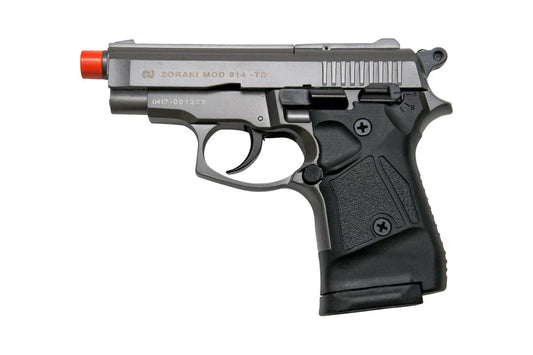
Zoraki blank gun

Zoraki Blank Firing Guns – Technical Review for...

Read our technical review on the Zoraki blank firing guns. Explore their uses, scenarios, and different models to help you better understand this amazing brand and what they can offer...

Zoraki Blank Firing Guns – Technical Review for Film & Training Use

Read our technical review on the Zoraki blank firing guns. Explore their uses, scenarios, and different models to help you better understand this amazing brand and what they can offer you for your individual needs.

1920s gangster holding a thompson machine gun

From Trench to Theater: The Enduring Legend of ...

Read all about the history of the original Thompson "Tommy" Gun as well as explore the available options from Denix. Read about the difference between the two offered models by...

From Trench to Theater: The Enduring Legend of the Thompson Submachine Gun

Read all about the history of the original Thompson "Tommy" Gun as well as explore the available options from Denix. Read about the difference between the two offered models by TCN Vault.

soldier holding a 1911 gun

Denix 1911 Non-Firing Replica Review: History, ...

Introduction Few firearms have left a legacy as enduring as the M1911. Designed by the legendary John Browning, this semi-automatic pistol has become synonymous with American military heritage, remaining in...

Denix 1911 Non-Firing Replica Review: History, Accuracy, and Ownership Value

Introduction Few firearms have left a legacy as enduring as the M1911. Designed by the legendary John Browning, this semi-automatic pistol has become synonymous with American military heritage, remaining in service for over a century. The M1911’s rugged design, reliable performance, and iconic silhouette have made it a favorite among collectors, reenactors, and firearm enthusiasts alike. Enter the Denix 1911 non-firing replica — a masterfully crafted homage to the original, offering the look, feel, and mechanical function of the real thing, without the legal complexities or safety concerns of a live firearm. Manufactured by Denix in Spain and distributed by trusted outlets such as ourselves, these replicas serve multiple purposes: they’re perfect for historical display, theatrical productions, safe firearms training, and personal collections. In this review, we’ll take an in-depth look at the Denix 1911 replicas — comparing their features to the original Colt M1911 and M1911A1 models, exploring the history of these replicas, and highlighting the advantages of owning one. Whether you’re a serious collector or just love historical firearms, this detailed breakdown will help you understand why Denix replicas have earned a solid place in the world of non-firing reproductions. Historical Background: The M1911 Legacy The Origin of the M1911 The Colt M1911, officially adopted by the U.S. military in 1911, was designed to replace the less effective .38 caliber revolvers used in the Philippine-American War. Chambered in .45 ACP, the M1911 was praised for its stopping power and reliability. It quickly became the standard sidearm for U.S. forces during World War I, World War II, the Korean War, and the Vietnam War. The M1911A1, an updated version introduced in the 1920s, featured slight modifications to improve handling — including a shorter trigger, arched mainspring housing, and improved sights. Despite these changes, the fundamental design remained nearly identical. Denix Replicas and Their Historical Role Denix began producing non-firing replicas in the mid-20th century with the mission of preserving military and historical weapon designs for collectors and enthusiasts. Based in Olot, Spain, Denix has built a reputation for manufacturing high-quality, historically accurate replicas that are legal to own in most parts of the world. Their line of M1911 replicas, particularly models like the Ref. 1312 and Ref. 6312, reflect a commitment to craftsmanship and historical fidelity. These replicas aren’t just for show — they replicate key mechanical functions of the real pistol, making them ideal for display and demonstration. Design and Construction Build Quality and Materials The Denix M1911 replicas are constructed from a proprietary zinc alloy (referred to as Zamak), which is both durable and corrosion-resistant. Though not as heavy as steel, the material gives the replicas a satisfying heft — typically weighing around 2 pounds (similar to the original unloaded pistol). The finish on the replicas varies slightly between models — with options in black, grey, antique silver, and dual-tone. Models like the 1312/C and 6312/C feature composite grips, closely resembling the Bakelite or hard rubber grips of WWII-era originals. Mechanical Functionality One of the standout features of Denix’s 1911 replicas is their functional mechanics: - The slide cycles manually, simulating the action of chambering a round.- The trigger moves and the hammer can be cocked and released.- The magazine is removable and often includes realistic spring tension.- Some models are field-strippable, such as the Collector’s Armoury M1911A1 Black Finish, allowing for partial disassembly — an uncommon feature in non-firing replicas. These functional details enhance the realism, making the Denix replicas useful for safe training demonstrations, stage use, or even cosplay and reenactments. Comparison with the Original M1911 Similarities Size and Dimensions: Denix replicas match the original in length (8.5 inches), grip angle, and frame profile.Weight and Balance: The weight is remarkably close to the original unloaded M1911, maintaining authentic balance.Mechanical Simulation: Trigger pull, hammer function, and slide action closely mirror the feel of the real thing.Field-Strippable Variants: Some models allow for a breakdown similar to the original firearm, which is perfect for demonstrating maintenance procedures. Differences Materials: While the original M1911 was made from steel, Denix uses Zamak alloy, which is lighter and not intended for live firing.Non-Firing Status: Denix replicas cannot chamber, fire, or be converted to fire live ammunition — a safety feature and legal requirement.Detailing: While impressive, some minor differences in machining, surface texture, and internal parts are noticeable on close inspection.Serial Numbers & Markings: Replicas feature Denix-specific branding and generic serial numbers, avoiding confusion with real firearms. Advantages of Owning a Denix 1911 Replica 1. Legal Accessibility In most jurisdictions, non-firing replicas like Denix models can be purchased and owned without special permits. This makes them ideal for collectors who want the aesthetic and mechanical feel of a firearm without navigating complex firearm laws. 2. Collector Appeal Whether you're interested in World War-era weapons, Cold War memorabilia, or cinematic history, the 1911 is a must-have. Denix’s historically faithful replicas fit beautifully into any collection, and their wide variety of finishes allows for customization. 3. Safe Training Tool Instructors and firearms trainers often use non-firing replicas for dry-fire drills, holster training, or classroom demonstrations. Since these replicas function mechanically, they offer a safe and cost-effective alternative to real firearms. 4. Reenactment and Film Use Theater productions, historical reenactments, and independent film projects benefit greatly from realistic non-firing weapons. Denix replicas deliver authentic visuals and handling without the safety risks of blanks or real guns. 5. Maintenance-Free Display Live firearms require regular cleaning and proper storage. A Denix replica, on the other hand, is virtually maintenance-free. It won't rust, jam, or degrade like a working firearm, making it an ideal display piece. In-Depth Look at Specific Denix Models Ref. 1312 (Black Finish with Composite Grips) This model most closely resembles the post-WWI M1911A1 variant. It features a sleek black finish and textured composite grips. The trigger, hammer, and magazine are all functional, and the overall weight gives it a realistic presence. Ref. 6312 (Nickel Finish with Wood Grips) A more modern look makes this piece a favorite among collectors interested in a modern period-authentic display. The nickel finish offers a more flashier look for those looking for a larger flare to their character in filming or theater scenes. Ref. 8312 and 9312 (Dual-Tone and Custom Finishes) These models add flair with two-tone finishes or polished details, making them stand out in any display. They still maintain full mechanical function and come with removable magazines. Ref. 5312 (Gold Finish Model) This striking version of the M1911 replica features a luxurious gold-tone finish that sets it apart from the standard models. Designed for collectors who want a standout piece, the Ref. 5312 is perfect for ceremonial or display purposes. Despite the flashy appearance, it retains the full mechanical functionality of other Denix replicas, including a working trigger, removable magazine, and cocking hammer. It's a showpiece that adds a regal touch to any military or firearm collection Use in Film and Pop Culture The 1911 has appeared in thousands of films, from war epics to modern action movies. Denix replicas, due to their realistic appearance and safety features, are often used in film and stage productions. Historical Dramas: Denix replicas are ideal for accurate WWII portrayals.Action Films: Their mechanical realism adds credibility without the danger.Cosplay and Fan Films: Lightweight and safe for public events, these replicas are often used in costume-based performances. Legal Considerations and International Ownership Denix replicas are legal in most countries but are subject to local laws. In the U.S., they are federally legal, though states like New York and California have stricter laws regarding display or transportation. Markings: Orange tips or markings may be required for display in public.Importation: Some countries restrict the import of replica firearms, so it is critical to check with local customs agencies.Airsoft vs. Replica: Denix models are not airsoft guns and cannot fire any projectiles. Care and Maintenance While Denix replicas require minimal maintenance, a few simple steps can preserve their longevity: Dust Regularly: Especially around moving parts.Light Lubrication: Use a silicone-based lubricant on the slide and trigger occasionally.Avoid Excessive Handling: Oils from the skin may cause the finish dulling over time.Display Cases: Use glass or acrylic cases for protection against dust and moisture. User Testimonials and Community Opinions Many collectors praise the Denix 1911 for its affordability and visual accuracy:  "I've handled real 1911s for over 30 years, and this Denix version is incredibly close. Great for my WWII display room." "Used this in a stage production with holstering and draw scenes — looked fantastic from the audience." "Perfect training tool for my concealed carry students to learn proper draw and safe handling without any risk." Forums like Reddit's r/Milsurp and dedicated collector groups on Facebook regularly feature Denix replicas in discussions. Conclusion: Is It Worth It? For anyone interested in military history, collecting, training, or theatrical performance, Denix 1911 replicas offer tremendous value. They deliver realistic handling, historical detail, and safety all in one package. While they can never fully replace the feel of real steel, they succeed in what they aim to be: beautiful, functional, safe representations of a legendary firearm. Whether you’re displaying them in a home office, using them on stage, or educating students about firearms, Denix replicas are a worthwhile investment in the past and a legal, safe nod to one of the greatest sidearms ever designed.

The history of Luger guns

The Legacy of The German Luger

Introduction: The Legacy of the German Luger Pistol The German Luger pistol, specifically the Parabellum P08, is one of the most iconic firearms in history. Recognized around the world for...

The Legacy of The German Luger

Introduction: The Legacy of the German Luger Pistol The German Luger pistol, specifically the Parabellum P08, is one of the most iconic firearms in history. Recognized around the world for its distinctive design and pivotal role in the wars of the 20th century, the Luger has come to symbolize both German engineering and military might. Its legacy extends beyond the battlefield, leaving a lasting impact on both historical studies and popular culture. In the hands of German officers during both World War I and World War II, the Luger served as a powerful sidearm, known for its precision and reliability. Today, the Luger P08 still holds a special place in the hearts of collectors, historians, and enthusiasts alike, not just because of its functionality, but due to the fascinating history it represents. Its presence in films, TV shows, and video games further solidifies its enduring legacy, elevating the pistol to the status of an iconic symbol of the 20th century. Beyond the realm of firearms, the Luger has come to be viewed as a cultural artifact—an object that evokes both admiration and intrigue. Its timeless design has been replicated in numerous non-firing models for collectors, historical reenactors, and film productions, allowing future generations to connect with its storied past without the risk or complications of owning a real firearm. These replicas provide an invaluable means of preserving history while offering an authentic look and feel that honors the original design.   The Birth of the Luger Early Firearm Development and Georg Luger’s Role The story of the Luger begins in the late 19th century when firearms were undergoing rapid advancements. At the time, the most effective handguns were primarily revolvers, which had been in use for over 50 years. However, there was a growing interest in semi-automatic pistols, which offered the potential for quicker follow-up shots and improved firepower. One of the key figures in the development of the Luger pistol was Georg Luger, a German engineer and firearms designer. Luger was working for the German arms manufacturer Deutsche Waffen- und Munitionsfabriken (DWM) when he set about improving on previous pistol designs. He was inspired by the work of Hugo Borchardt, whose C-93 model, introduced in 1893, was the first commercially successful semi-automatic pistol. Luger refined the C-93’s design by improving its mechanism and ergonomics, ultimately leading to the creation of the Luger pistol. His version utilized a distinctive toggle-lock mechanism, which was a key feature that set the Luger apart from other pistols of the time. The toggle-lock system provided a smooth and reliable cycling action, setting the Luger apart from many other handguns that used recoil or blowback systems. The Borchardt C-93 and Its Influence on the Luger Before the Luger was born, the C-93 was the first commercially available semi-automatic pistol. Designed by Hugo Borchardt, this pistol featured a unique recoil-operated system and was notable for its large, boxy design. While the C-93 had a number of technical innovations, it also had several flaws, including its awkward grip and the complex operation of its toggle-lock system. Despite these issues, the C-93 proved to be an important stepping stone in the development of more modern pistols. Georg Luger took inspiration from the C-93, but he aimed to create a more practical and ergonomic pistol that would appeal to military forces around the world. By simplifying the toggle-lock mechanism and improving the pistol’s grip and handling, Luger made key advancements in the design that would ultimately lead to the creation of a truly revolutionary firearm. Development and Testing of the Luger Models In 1898, Luger’s refinements were first tested in a prototype known as the “Model 1900.” This version of the Luger used the 7.65x21mm Parabellum cartridge and featured the signature toggle-lock system. Although the Model 1900 was initially met with some skepticism, it demonstrated significant potential in terms of accuracy, reliability, and power. In 1904, a modified version of the Luger, the “Modell 1904,” was produced specifically for the Imperial German Navy. This variant featured a longer barrel to improve the accuracy of the pistol, a feature that would become increasingly important as military engagements became more complex and tactical. The German Army, recognizing the potential of the Luger, began testing it in 1908. After extensive trials, the “Modell 1908” or P08 was adopted as the standard-issue sidearm for German officers. The P08 quickly became the most famous version of the Luger, and it saw widespread use throughout both World War I and World War II. The Influence of the Luger in Early 20th Century Firearm Design The Luger’s influence on firearm design cannot be overstated. Its toggle-lock mechanism was revolutionary, setting the stage for future developments in semi-automatic pistols. The Luger’s design was admired for its precision and reliability, qualities that would influence the design of many firearms that followed. Even today, the Luger P08 remains a model of efficiency in the world of handgun design. By adopting the Luger as a standard issue for military personnel, Germany effectively set the bar for what a sidearm should be in the 20th century. The pistol’s accuracy, ease of use, and distinctive aesthetic quickly made it a favorite among soldiers and officers alike. The Luger also contributed to the growing popularity of semi-automatic pistols in military arsenals worldwide, influencing the development of future sidearms, including the American M1911 and the Italian Beretta 92. Luger Models and Variations While the Luger P08 is the most iconic and widely recognized model, there were several other variants and models produced throughout its history. Each version of the Luger had its own specific purpose, whether for use in the German military, naval forces, or artillery units. The various Luger models differed in size, barrel length, and caliber, reflecting the specific needs of the military forces they were intended for. Model 1900 The first mass-produced Luger, the Model 1900, was chambered in the 7.65x21mm Parabellum cartridge and featured a 4-inch barrel. This initial design was intended to offer a semi-automatic pistol that could replace the outdated revolvers in use by various European armies. Despite its success, the Model 1900 was soon overshadowed by the later developments of the Model 1904 and Model 1908, but it nonetheless played an important role in demonstrating the potential of the Luger design. Modell 1904 (Navy Luger) Developed specifically for the Imperial German Navy, the Modell 1904 featured a longer barrel to improve the accuracy and range of the pistol. It was chambered in the 9mm Parabellum cartridge, a caliber that would become the standard for the German military during World War I and beyond. This model was issued to naval officers and soldiers and was distinguished by its longer, more accurate barrel. The Modell 1904’s design elements were a precursor to the Modell 1908, and it set the standard for Luger pistols that would eventually be produced for other branches of the German military. Its features included a toggle-lock mechanism, which would become synonymous with the Luger name. Modell 1908 (P08) The Modell 1908, also known as the P08, is the most famous and widely recognized Luger model. It was adopted as the standard sidearm for the German military and became a symbol of German engineering excellence. The P08 was chambered in 9mm Parabellum and featured a 4-inch barrel. Its toggle-lock mechanism made it reliable, and its ergonomic design made it easy to handle. One of the key innovations of the P08 was its use of a detachable magazine, which allowed soldiers to carry more rounds than traditional revolvers. This made the P08 a highly effective sidearm for combat. The P08 would go on to be used by the German military during both World War I and World War II. The Artillery Luger   The Artillery Luger was a longer-barreled version of the standard P08, designed specifically for use by artillery units. The Artillery Luger had a 7.75-inch barrel, which provided increased accuracy and range compared to the standard P08. Additionally, the Artillery Luger was equipped with a stock/holster combination that could be used for greater stability when aiming. The Artillery Luger was particularly effective for long-range engagements, and its longer barrel made it more accurate than the standard P08. This variant was particularly useful for soldiers in artillery and infantry units who required a higher level of accuracy when using a sidearm. Luger in World War II By the time World War II broke out, the Luger P08 was beginning to be phased out in favor of newer semi-automatic pistols, such as the Walther P38. However, the Luger P08 still saw significant use during the early years of the war, particularly by German officers and in special units. It was viewed as a prestigious weapon and remained a symbol of German military power.   The German Luger in Historical Context The Role of the Luger in World War I During World War I, the German military issued the Luger P08 to officers and non-commissioned officers. The pistol was highly regarded for its accuracy and reliability, making it an ideal sidearm for officers in trench warfare. The Luger was often seen as a symbol of military prestige, and it played a significant role in the German military’s efforts during the war. The Luger P08 proved to be a formidable sidearm during World War I. With its toggle-lock mechanism and chambering of the 9mm Parabellum cartridge, it offered more stopping power and a quicker rate of fire compared to the revolvers commonly used at the time. Officers and senior soldiers in the German military were issued the Luger, as it was seen not only as a functional weapon but also a prestigious symbol of rank. The effectiveness of the Luger during trench warfare made it indispensable to German officers, who used it for self-defense, as well as a weapon for close-quarters combat. The compact design made it easy to carry and use in confined spaces, giving German officers a distinct advantage when engaging in trench raids or during ambushes. The P08’s relatively high magazine capacity of 8 rounds also set it apart from revolvers, which typically carried fewer rounds. This allowed soldiers to carry more ammunition, which could be crucial during intense combat situations when reloading quickly was necessary. The Luger’s long-lasting reliability in harsh conditions helped cement its status as one of the most important firearms of the early 20th century. The Luger in World War II By the time World War II began, the Luger P08 had already been replaced by the Walther P38 as the standard-issue sidearm for the German military. However, the Luger remained in service during the early years of the war, particularly with officers, paratroopers, and elite units. Its status as a symbol of prestige meant that many soldiers still preferred to use the Luger over the newer P38, as it was more familiar and had a more iconic place in history. The Luger P08 was used in a variety of situations, including during the invasion of France and the battles on the Eastern Front. Many German soldiers and officers carried the Luger into combat, and it was often seen in photographs of prominent Nazi figures, further cementing its association with the regime. Despite being phased out in favor of the P38, the Luger continued to be in high demand, and various special editions of the P08 were produced for use by high-ranking officers. These versions were often decorated with intricate designs, including gold plating, engraving, and pearl grips, making them both functional and status symbols. The Fall of the Luger as a Military Weapon While the Luger P08 had been a revolutionary design in its time, it was gradually phased out during World War II due to the increased need for mass production and simplified firearms. The Walther P38, with its simpler construction and more modern design, was more suited for mass production, and it replaced the Luger as the standard-issue pistol for the German military in 1938. The Luger was still used by German officers and in specialized roles, but its time as the most iconic sidearm of the Wehrmacht was coming to an end. By the war’s conclusion in 1945, the Luger P08 was considered obsolete, and the Walther P38 became the new symbol of German sidearms. Cultural Significance: The Luger as a Symbol Despite being overshadowed by more modern firearms, the Luger pistol’s cultural significance remained strong long after World War II. The Luger became a symbol of the early 20th century, representing both German military might and technological innovation. It became a key item for collectors, military historians, and firearm enthusiasts due to its history and unique design. Its distinctive toggle-lock mechanism, elegant lines, and finely crafted details have made the Luger one of the most collectible pistols in the world. Its importance as a historical artifact has made it a sought-after piece in museums, private collections, and firearm auctions. Beyond the world of firearms, the Luger has come to represent the period of World War I and World War II in popular culture. It is frequently used in films and TV shows set during these times to evoke a sense of realism, and its distinctive look continues to make it a symbol of the era. Its design and history continue to capture the imagination of filmmakers, historians, and collectors alike.   The Luger in Popular Culture Films Featuring the Luger P08 The German Luger pistol has made numerous appearances in films, especially those set during the World War I and II eras. These films often depict the Luger as a symbol of German military power, and it is frequently used by German officers or as a weapon wielded by the antagonists. Some of the most notable films in which the Luger appears include: • The “Indiana Jones” Series: In the “Indiana Jones” films, the Luger P08 frequently appears as the weapon of choice for Nazi officers. In Raiders of the Lost Ark, the Luger is used by various characters, including Nazi soldiers and Indiana Jones’ enemies. The Luger’s appearance in these films serves as a visual shorthand for the German military during World War II. • “Where Eagles Dare” (1968): This World War II film, starring Richard Burton and Clint Eastwood, features multiple scenes with the German Luger as a key weapon used by the German soldiers and officers. The Luger in this film is portrayed as a symbol of German military power, adding to the film’s gritty, realistic atmosphere. • “The Great Escape” (1963): In The Great Escape, a film about Allied prisoners of war escaping from a German POW camp, the Luger is used by German guards and officers. The iconic nature of the Luger, paired with the tense escape scenes, reinforces its role as the quintessential sidearm of the German military during the war. The Luger in TV Shows The Luger has also been a staple in various TV shows, particularly those that focus on historical drama or World War II-era settings. One of the most famous modern appearances of the Luger is in “The Walking Dead”, a post-apocalyptic TV series in which several characters use the Luger as part of their survival gear. In The Walking Dead, the Luger is portrayed as a weapon of choice for both main characters and antagonists, often appearing in scenes where survival and resourcefulness are key. The gun’s historical roots and its association with military power make it an interesting choice in the post-apocalyptic world of The Walking Dead, adding an extra layer of complexity to the character’s survival. Luger in Video Games In addition to its prominence in film and TV, the Luger has appeared in numerous video games. Military shooters and historical strategy games often include the Luger to provide authenticity to their depictions of World War I and World War II. Its distinctive design and historical significance make it a popular choice for game developers looking to provide realistic, period-accurate weapons. Games such as Call of Duty, Battlefield, and Medal of Honor feature the Luger as a primary or secondary weapon, allowing players to experience combat using this iconic pistol. Its inclusion helps players immerse themselves in the historical context of the games while allowing them to wield a piece of history in their virtual battles. Symbolism in Modern Media The Luger has become more than just a firearm in popular culture; it is a symbol. In films and TV shows, the Luger is often associated with the Nazi regime and German military power. This association has given the Luger a specific place in historical fiction, where it often represents a dark and violent era in history. However, the Luger’s symbolism is not limited to its use by antagonists. In many films, the Luger is portrayed as a revered and prestigious weapon, especially when held by high-ranking officers. The historical significance of the Luger makes it an easy tool for filmmakers to use as shorthand for a specific time period, adding realism and depth to the setting.   The Luger in the Collecting World Why Collectors Love the Luger The Luger pistol has earned a revered place in the world of firearm collecting. Its distinctive design, historical significance, and relative scarcity make it a highly desirable item for collectors. For enthusiasts of military history, owning a Luger means possessing a tangible connection to one of the most iconic firearms of the 20th century. Collectors prize the Luger not just for its functionality, but for its beauty and craftsmanship. The intricate mechanics, including the famous toggle-lock mechanism, as well as the pistol’s aesthetic appeal, make it a fascinating object for study and display. The Rarity of Original Lugers Finding an original Luger in good condition can be a difficult and costly endeavor. Over the years, many Lugers were lost or destroyed in combat, while others were repurposed or discarded. As a result, finding an authentic, fully functional Luger from World War I or World War II is a rare occurrence, especially in working condition. Collectors who seek to add a Luger to their collection often find themselves paying a premium for these rare pieces, sometimes upwards of $11,000 USD. Even replicas of original Lugers can be expensive, as they are crafted with the same level of precision and attention to detail as the originals. Restoration and Preservation of Original Lugers When collectors or museums obtain original Lugers, they often go through a process of restoration and preservation to maintain the firearm’s condition. This can involve cleaning and repairing components that have deteriorated over time, as well as replacing parts that are no longer functional. Specialists in firearm restoration often work with collectors and institutions to ensure that original Lugers are preserved in a way that respects their historical value while maintaining their mechanical integrity. This preservation allows future generations to appreciate the craftsmanship and history of these iconic pistols.   Non-Firing Replicas and the Denix Models As the world’s interest in historical firearms continues to grow, many enthusiasts have sought ways to experience the iconic design of the Luger pistol without the complications and regulations of owning a functional weapon. Non-firing replicas provide a safe and accessible means for collectors, reenactors, educators, and filmmakers to engage with the past while preserving the historical accuracy and craftsmanship of iconic firearms like the German Luger P08. Why Non-Firing Replicas Are Popular Non-firing replicas of historical firearms have become increasingly popular for a variety of reasons. For many people, owning a real firearm—especially one with historical significance—can be difficult due to legal restrictions, safety concerns, and the sheer cost of acquiring such pieces. Non-firing replicas offer a solution to these issues, providing an authentic look and feel without the dangers associated with functional firearms. For collectors, non-firing Lugers and other historical firearms serve as valuable items to display, study, and appreciate. These replicas are often indistinguishable from the real thing in terms of their visual appeal and mechanical design, making them a perfect way to add a piece of history to a collection without the need for an actual weapon. In addition to collectors, reenactors and cosplayers use non-firing replicas to add authenticity to their portrayals of historical events and characters. Historical reenactments, particularly those involving military conflicts like World War I and World War II, benefit from the realism these replicas provide, allowing participants to represent the past in an immersive and historically accurate way. Filmmakers also make use of non-firing replicas to create realistic portrayals of historical conflicts. Non-firing models like the Luger P08 can be used in place of real firearms, providing the same level of detail without the risk of working weapons being involved in film productions. These replicas allow filmmakers to safely depict the historical period while ensuring the safety of their cast and crew. Craftsmanship Behind Non-Firing Replicas Companies like Denix specialize in producing highly detailed, non-firing replicas of iconic firearms. Denix’s Luger P08 replicas, for example, are crafted with an incredible amount of attention to detail, ensuring that they closely resemble their functional counterparts. Every part of the pistol is meticulously crafted to replicate the appearance, feel, and weight of the original Luger. Denix uses a combination of high-quality materials, including metal alloys, wood, and plastic, to produce these replicas. The metal parts are often cast in a way that mimics the original Luger’s finish, and the grip panels are made from plastic to resemble the wood or checkered plastic grips seen on authentic P08s. One of the most impressive features of Denix replicas is the precision with which the internal mechanisms are replicated. While the Luger’s famous toggle-lock mechanism does not function in these non-firing versions, the mechanism’s intricate design is still present for visual purposes. The toggle-lock on Denix models operates as a purely aesthetic feature, providing a visual connection to the original design. The attention to detail in these replicas allows collectors and reenactors to hold a historically accurate version of the Luger, providing a tangible link to the past. Even though these replicas cannot fire real ammunition, they offer a realistic experience for anyone who wishes to study the pistol or use it for educational purposes. The Mechanics of Denix Replicas The key difference between an authentic Luger and a Denix non-firing replica lies in the internal mechanics. While the Luger’s original design relied on a toggle-lock mechanism to cycle rounds and expel spent cartridges, the Denix replica lacks this functionality. Instead, the replica’s toggle-lock is non-operational and purely cosmetic. The mechanism is static and does not cycle when the gun is handled. Despite this, the external features of the Denix Luger are carefully engineered to replicate the appearance of the original. The pistol’s weight, dimensions, and surface finish closely mirror the original firearm, creating a highly authentic look. The magazine is removable, and the grip panels closely resemble the materials used in authentic models. For collectors, reenactors, and historical enthusiasts, this level of detail offers a close enough representation of the Luger without the associated risks and restrictions of owning a live firearm. Comparison to the Real Thing While non-firing replicas like Denix’s Luger P08 are designed to look and feel like the original, they differ in several significant ways: • Functionality: The most obvious difference is the lack of firing capability. While the original Luger P08 can fire live ammunition, the Denix replica has no firing mechanism and cannot be used for live shooting. • Internal Mechanisms: The original Luger’s toggle-lock mechanism is fully operational and essential for cycling rounds. In contrast, the Denix model’s toggle lock is a purely aesthetic feature, with no functioning parts inside the replica. • Material Composition: Authentic Lugers were made of steel, with precise machining for operational purposes. Denix replicas are made from metal alloys and other materials, which, while durable and realistic in appearance, cannot match the engineering precision of the original. • Cost and Availability: Original Lugers, especially those in good condition, can be very expensive and rare. Non-firing replicas, on the other hand, are much more affordable and widely available, making them a more accessible option for those who cannot afford or do not wish to own a real firearm.   Advantages of Non-Firing Replicas For many enthusiasts, collectors, and historical reenactors, the appeal of non-firing replicas goes far beyond mere visual authenticity. These replicas offer several key advantages that make them an ideal choice for those who wish to own a piece of history without the challenges of owning a live firearm. Safety and Accessibility Perhaps the most important advantage of non-firing replicas is the enhanced safety they offer. Firearms, even when deactivated, can be dangerous, and their use in public events or educational settings can present significant risks. Non-firing replicas, such as the Denix Luger, completely eliminate these risks while still offering an authentic visual and tactile experience. Because non-firing replicas have no live ammunition or operational firing mechanisms, they can be safely handled by people of all ages in various settings, including schools, museums, and historical events. In addition, they do not require the same safety precautions as functional firearms, making them ideal for use in educational programs, demonstrations, or historical reenactments. Furthermore, non-firing replicas make it possible for individuals who live in regions with strict firearm regulations to own and study historically significant weapons. In many countries, owning a functional firearm can be subject to extensive legal restrictions, but owning a non-firing replica can often bypass these legal hurdles. Legality and Ownership The legal complexities surrounding the ownership of real firearms are well known. In many jurisdictions, owning a firearm, especially one with historical value, requires permits, background checks, and adherence to various safety regulations. In contrast, non-firing replicas are usually exempt from these legal requirements, making them an attractive option for collectors and history enthusiasts who want to own a piece of history without navigating the bureaucratic hurdles of firearm ownership. Non-firing replicas also provide a more accessible option for individuals who want to participate in historical reenactments, cosplays, or educational activities but do not want to risk the legal or safety issues associated with real firearms. These replicas can be legally transported and used without the need for special permits or licenses, allowing enthusiasts to fully immerse themselves in historical settings without any legal constraints. Cost of Non-Firing Replicas Another significant advantage of non-firing replicas is their cost. Original Lugers and other historic firearms can fetch astronomical prices at auction, particularly if they are in good condition or have a significant provenance. The high cost of acquiring and maintaining an original Luger makes it an inaccessible option for many collectors. Non-firing replicas, on the other hand, are much more affordable, offering an authentic look and feel at a fraction of the cost of an original firearm. This makes non-firing Lugers an excellent entry point for newcomers to firearm collecting or for those who wish to experience the historical significance of these weapons without the financial burden. Practical Use in Historical Reenactments Non-firing replicas like the Denix Luger play an essential role in historical reenactments, particularly those focused on World War I and World War II. Reenactments require participants to accurately portray the equipment, weapons, and uniforms of the period, and non-firing replicas provide a safe and realistic way to do so. In large-scale reenactments, such as those that depict famous battles or military campaigns, non-firing Lugers are used to replicate the authentic sidearms carried by soldiers and officers. These replicas help ensure that the reenactment feels genuine, with participants using period-appropriate equipment. By using non-firing replicas, reenactors can avoid the risks of handling real firearms while still maintaining the authenticity of their portrayal. In addition, non-firing replicas are far more affordable than authentic firearms, making them an accessible option for reenactors who may not have the budget to purchase real weapons. They are also easier to transport and handle, reducing the logistical challenges that can arise when working with live firearms.   Cosplay and Film Use The popularity of historical cosplay and period-themed films has also contributed to the demand for non-firing replicas like the Luger P08. Cosplayers who wish to portray characters from World War I, World War II, or any other time period that involved the Luger use non-firing replicas to complete their costumes. These replicas offer an affordable and safe alternative to using real firearms while maintaining the authenticity of the character they are portraying. Similarly, filmmakers often rely on non-firing replicas for their productions. Historical dramas, action films, and war movies frequently feature iconic weapons like the Luger to evoke the atmosphere of the era. Non-firing replicas allow filmmakers to depict realistic combat scenes without the danger of using live ammunition or functioning firearms. These replicas can be used safely by actors while maintaining the historical accuracy and integrity of the film.   Reenactments and Cosplay Historical Reenactments and the Role of the Luger Historical reenactments offer participants the opportunity to immerse themselves in the past, often by reenacting famous battles, skirmishes, or daily life during specific historical periods. In these reenactments, non-firing replicas of weapons like the Luger play a crucial role in helping create an authentic atmosphere. For those participating in reenactments of World War I and World War II, the Luger P08 is one of the most recognized and iconic weapons of the era. Its use in reenactments adds a layer of realism, as participants are able to carry and use replicas of the same sidearm that soldiers, officers, and combatants from that time would have used. Non-firing replicas allow reenactors to stay true to the historical period without risking the safety concerns of using live firearms. Cosplay Communities and Luger Use Cosplay, the practice of dressing up as characters from movies, TV shows, and historical periods, has become an incredibly popular activity. For those who cosplay as military officers, soldiers, or characters from the World War I or World War II era, the Luger P08 is a key part of the costume. Cosplayers who wish to accurately portray German officers, soldiers, or characters from films like Indiana Jones or The Great Escape often turn to non-firing Luger replicas to complete their outfits. These replicas provide the perfect accessory to ensure that their portrayal is historically accurate, while remaining safe and legal. Safety in Reenactments and Cosplay One of the main advantages of using non-firing replicas in reenactments and cosplay is safety. Real firearms, even if deactivated or replicas, present significant risks in both live-action settings and public appearances. Non-firing replicas eliminate these risks, allowing participants to enjoy their historical portrayals without worrying about the dangers posed by live weapons. In historical reenactments, where large groups of people may be engaged in close-quarters action or mock battles, the use of non-firing replicas is essential to maintaining safety. These replicas ensure that no one is at risk of injury while still allowing participants to engage in a fun and immersive historical experience. Conclusion: The Legacy of the Luger and Its Non-Firing Replicas The German Luger P08 pistol remains one of the most iconic firearms in history, admired for its engineering, precision, and unique design. From its origins in the late 19th century to its role in both World Wars, the Luger has left an indelible mark on military history. Its continued presence in popular culture, films, TV shows, and video games demonstrates its lasting impact on our collective imagination. For collectors, reenactors, and film enthusiasts, the Luger’s legacy is preserved and celebrated through non-firing replicas. These replicas, especially those made by companies like Denix, offer an accessible and safe way to connect with history, providing a tangible link to the past. Whether used for educational purposes, as part of a collection, or in reenactments and cosplay, non-firing Lugers allow people to experience the craftsmanship and historical significance of one of the world’s most famous firearms without the complexities and risks of owning a real weapon. As interest in historical firearms continues to grow, non-firing replicas like the Luger will remain a vital part of preserving the past for future generations. They allow us to appreciate the artistry and significance of these weapons while ensuring that we can enjoy them in a safe and responsible manner.

Denix 1873 Revolver Review: The Best Non-Firing Replica Peacemakers for Collectors & Enthusiasts

Denix 1873 Revolver Review: The Best Non-Firing...

The Colt Single Action Army (SAA) revolver, introduced in 1873, has become an enduring symbol of the American West. Its robust design and reliable performance made it a favorite among...

Denix 1873 Revolver Review: The Best Non-Firing Replica Peacemakers for Collectors & Enthusiasts

The Colt Single Action Army (SAA) revolver, introduced in 1873, has become an enduring symbol of the American West. Its robust design and reliable performance made it a favorite among lawmen, outlaws, and settlers alike. For enthusiasts and collectors today, Denix offers meticulously crafted non-firing replicas of this iconic firearm, allowing individuals to own a piece of history without the complexities associated with functional firearms. Denix 1873 Revolver Replicas: Models and Features Denix has developed a range of 1873 revolver replicas, each reflecting the nuances of the original designs. Here are some notable models: 1. Denix 1873 Peacemaker Revolver with 5.5” Barrel (Model 1150/G): This replica features a 5.5-inch barrel, metal construction, and faux ivory grips. The simulated mechanism allows for loading and firing actions, complete with a rotating cylinder. 2. Denix 1873 Peacemaker Revolver with 5.5” Barrel and Wood Grips (Model 1106G): Measuring 12 inches overall with a 5.5-inch metal barrel, this non-firing replica boasts wood grips and a functional rotating drum, emulating the original’s loading and firing mechanisms. 3. Denix 1873 Quick Draw Colt Peacemaker Revolver with 4.75” Barrel: Designed for enthusiasts of the quick-draw era, this replica showcases a 4.75-inch barrel, wood grips, and a shell ejector. Its realistic action allows users to cock and pull the trigger, mimicking the experience of handling the original firearm. 4. Denix 1873 Western Frontier Replica Revolver with Engravings and Faux Ivory Grips: This model presents a 5.5-inch barrel, faux ivory grips, and a realistic working action. Users can spin the cylinder, pull the trigger, and drop the hammer, closely replicating the handling of the original revolver. Craftsmanship and Authenticity Denix is renowned for producing high-quality, non-firing replicas that capture the essence of historical firearms. Their 1873 revolver replicas are crafted with meticulous attention to detail, ensuring that each piece reflects the design and feel of the original. Constructed from metal with realistic grips, these replicas feature functional mechanisms, including rotating cylinders and operational hammers, providing an authentic handling experience.   Comparison to Original Firearms While Denix replicas are non-functional, they are designed to closely resemble the original firearms in terms of weight, size, and mechanical operation. The materials used, such as metal and wood or faux ivory for grips, contribute to the realistic feel. However, certain internal components are simplified or omitted to ensure that the replicas cannot be modified to fire live ammunition. This distinction makes them safe for display, educational purposes, and theatrical use. Customer Reviews and Testimonials Collectors and enthusiasts have praised Denix replicas for their authenticity and quality. Many appreciate the balance between aesthetic appeal and functional realism, making these replicas suitable for display, educational purposes, and theatrical use. The attention to detail in replicating the weight, dimensions, and mechanical actions of the original firearms has been highlighted in numerous reviews, solidifying Denix’s reputation in the replica firearms industry. Availability at TCN Vault For those interested in acquiring these Denix 1873 revolver replicas, TCN Vault offers a selection of models available for purchase: 1. Denix 1873 Peacemaker Revolver with 5.5” Barrel and Wood Grips: This non-firing replica features a 5.5-inch metal barrel, wood grips, and a rotating drum, closely emulating the original’s design. 2. Denix 1873 Quick Draw Colt Peacemaker Revolver with 4.75” Barrel: Ideal for enthusiasts of the quick-draw era, this replica showcases a 4.75-inch barrel, wood grips, and a shell ejector. Its realistic action allows users to experience the handling of the original firearm. 3. Denix 1873 Western Frontier Replica Revolver with 5.5” Barrel and Faux Ivory Grips: This model presents a 5.5-inch barrel, faux ivory grips, and a realistic working action, allowing users to spin the cylinder, pull the trigger, and drop the hammer. Conclusion The 1873 Colt Single Action Army revolver holds a significant place in American history, symbolizing the rugged spirit of the Old West. Denix’s non-firing replicas offer enthusiasts and collectors an opportunity to own a piece of this legacy, with meticulous craftsmanship that honors the original design. Whether for display, educational purposes, or theatrical use, these replicas serve as a testament to the enduring allure of the 1873 revolver.