
How the M1 Garand Helped Win the Battles That Defeated the Axis
When American soldiers went into battle during World War II, they carried something most enemy infantrymen did not have: a full-power semiautomatic rifle as their standard service weapon.
It was the U.S. Rifle, Caliber .30, M1, better known as the M1 Garand.
To call any single weapon the gun that won World War II would be an exaggeration. The Axis powers were defeated by an enormous combination of manpower, industrial production, naval power, air superiority, intelligence, logistics, artillery, armor, and sacrifice on battlefields stretching across the globe.
Yet at the level where wars are ultimately fought, by individual soldiers taking and holding ground, the M1 Garand gave American infantrymen a genuine advantage.
A German infantryman carrying a Karabiner 98k normally had to manually operate the bolt between shots. The same basic limitation applied to Japanese soldiers armed with Arisaka rifles. An American rifleman with an M1 could fire, recover his sight picture, and fire again simply by pulling the trigger.
Eight rounds of powerful .30-06 ammunition were immediately available before the rifle needed another clip.
That difference mattered. It mattered in the jungles of Guadalcanal. It mattered in the hedgerows of Normandy. It mattered during the desperate winter fighting in the Ardennes. And it continued to matter as American troops fought toward the heart of Nazi Germany and across the Pacific toward Japan.
General George S. Patton famously described the M1 as “the greatest battle implement ever devised.” The praise was dramatic, but it reflected the extraordinary reputation the rifle had earned among American forces.
The story of the M1 Garand is therefore not simply the story of a famous rifle. It is the story of how superior infantry firepower helped American soldiers survive and win some of the most important battles of World War II.
America Enters the War With a Different Kind of Rifle
The significance of the M1 becomes much clearer when it is compared with the rifles carried by most soldiers at the beginning of World War II.
Bolt action rifles remained the standard infantry weapons of the major combatants. Germany relied heavily upon the Karabiner 98k. Britain used the Lee Enfield. Japan fielded several models of the Arisaka. The Soviet Union primarily armed its infantry with Mosin Nagant rifles, although it also produced significant numbers of semiautomatic weapons.
These were capable and often extremely reliable rifles. But after every shot, their operators generally had to manipulate the bolt before firing again.
The United States had taken a different path.
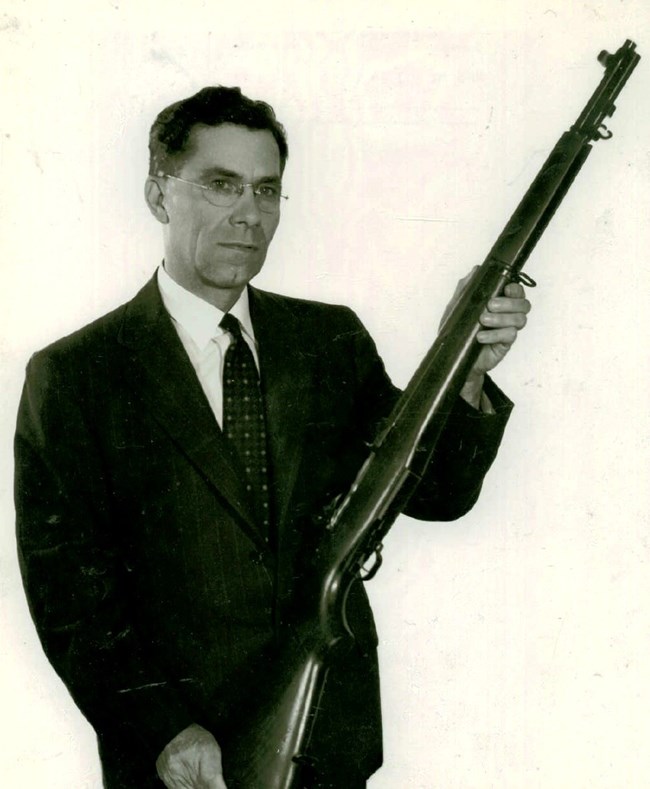
John C. Garand spent years developing a reliable semiautomatic military rifle at Springfield Armory. The U.S. Army officially adopted his design in 1936.
The M1 used energy from the firing process to cycle its action automatically. The shooter did not have to manually operate a bolt after every round. The rifle weighed roughly 9.5 pounds and was loaded with an eight-round en bloc clip.
This was not simply a technological novelty. It changed what an ordinary rifleman could do during a firefight.
The National Archives notes that the M1 could fire more than twice as fast as the Army's previous standard service rifle. U.S. Army historical studies concluded that American troops entered World War II with semiautomatic rifles that provided a decided advantage over their enemies.
That advantage would soon be tested under conditions no proving ground could reproduce.
Guadalcanal: Where the Advantage Became Impossible to Ignore
One of the earliest demonstrations of the Garand's battlefield value occurred thousands of miles from Europe.
Guadalcanal was the first major American ground offensive against Japan in the Pacific. U.S. Marines landed on the island in August 1942, beginning a brutal campaign that lasted into early 1943.
But there was an important difference between some of the American units fighting there.
The Marine Corps had transitioned to the M1 later than the Army, and many Marines on Guadalcanal were still carrying the bolt-action M1903 Springfield. Army units arriving as reinforcements were equipped with Garands.
The difference was immediately noticeable.
The U.S. Army's official history of the M1 recounts an October 1942 night battle during which elements of the Army's 164th Infantry reinforced Marines under attack. Once the Army riflemen joined the fight with their M1s, Marines noticed that the sound and tempo of American rifle fire increased dramatically.
The Army's official history of the Guadalcanal campaign subsequently concluded that the M1 had proven superior to the M1903 Springfield carried by many Marines.
Why?
Guadalcanal often produced extremely close engagements. The Army's campaign history notes that many infantry targets appeared at distances of less than fifty yards. At such distances, the ability to fire another aimed shot immediately could become enormously valuable.
A soldier did not need to move his firing hand to manipulate a bolt. He could remain aimed toward the threat, fire, recover, and fire again.
In a close-range jungle engagement, seconds mattered. Guadalcanal became one of the first great proving grounds for the M1 Garand.

Normandy: A Rifle Built for a Fast-Moving Battlefield
By June 1944, the M1 Garand was no longer an experimental advantage. It was part of the identity of the American infantryman.
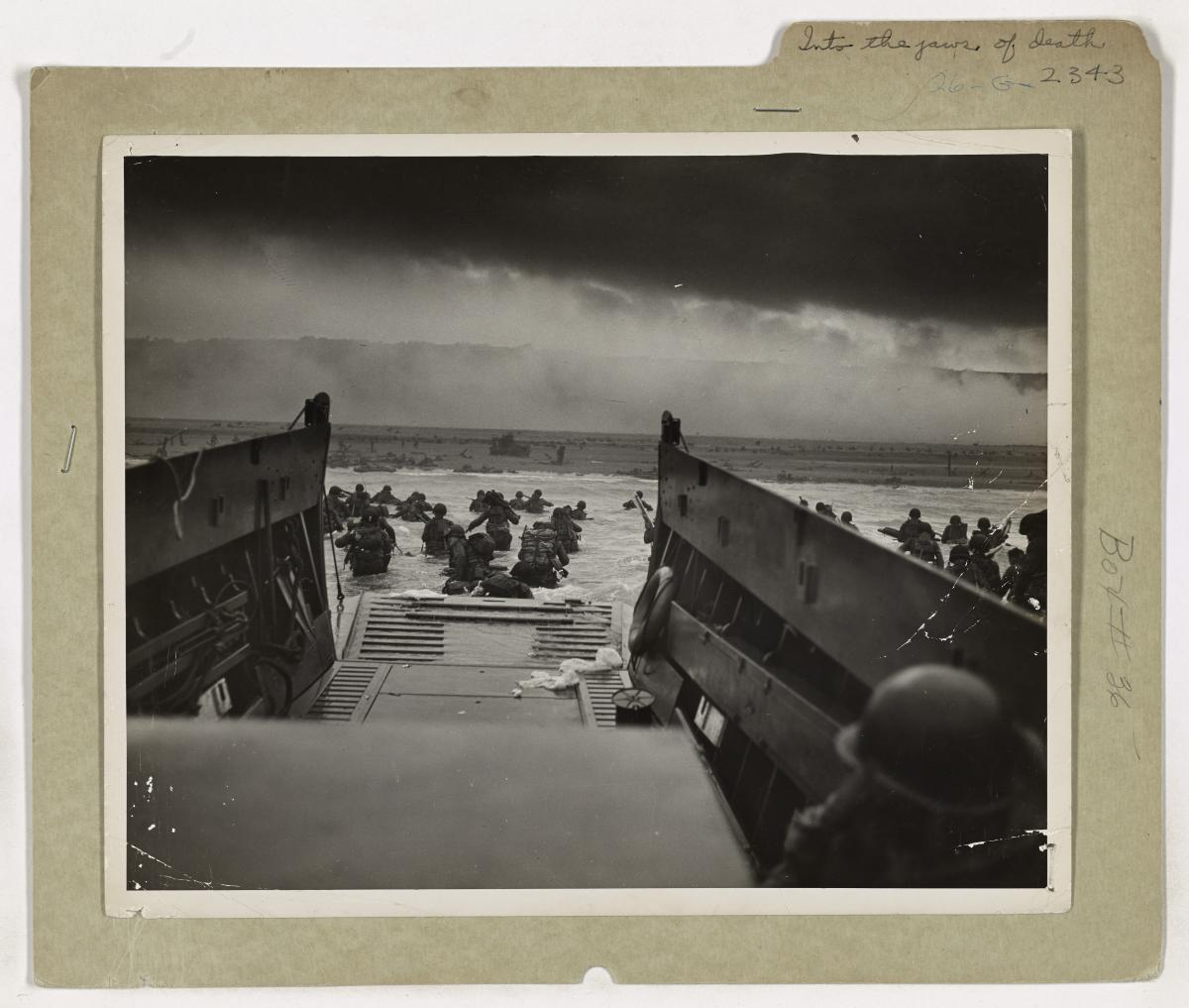
On June 6, 1944, Allied forces launched Operation Overlord and assaulted the Normandy coast. American troops landed at Omaha and Utah Beaches while American airborne divisions descended behind German positions.
At Omaha, resistance was ferocious. American forces in the center of the invasion faced particularly determined opposition, yet by the end of the day the Allies had established a foothold in France.
The Garand did not neutralize German machine guns, destroy coastal fortifications, or replace artillery and naval gunfire. What it did was give the rifleman more immediate firepower once the infantry battle began.
That became particularly valuable after the beaches.
Normandy was filled with hedgerows, villages, sunken roads, fields, and short sight lines. German defenders could appear suddenly from concealed positions. Small groups of soldiers frequently fought for individual fields and road junctions.
The M1 allowed an American rifleman to engage multiple targets or make rapid follow-up shots without manually cycling the action.
The advantage was not that every American soldier suddenly became a machine gunner. The Garand remained a semiautomatic rifle, firing one cartridge for every pull of the trigger. Its advantage was controlled, immediately repeatable rifle fire.
American infantry squads still relied heavily upon weapons such as the Browning Automatic Rifle for automatic fire. Machine guns, mortars, tanks, artillery, and aircraft remained essential. But the M1 raised the baseline firepower of nearly every rifleman in the squad.
Multiply that advantage across a platoon, company, battalion, regiment, and eventually an army, and its significance becomes much easier to understand.
Six months after D-Day, American soldiers faced an entirely different battlefield.
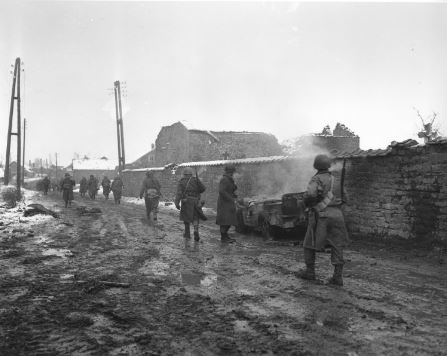
On December 16, 1944, Germany launched a massive surprise offensive through the Ardennes. Hitler hoped to rupture the Allied front, seize Antwerp, and divide the Western Allied armies. The attack created what became known as the Battle of the Bulge.
American soldiers fought in forests, villages, frozen fields, and snow-covered defensive positions as German forces attempted to exploit the initial breakthrough.
Again, no rifle determined the battle. American artillery was devastating. Tanks and tank destroyers played major roles. Allied air power became increasingly important once the weather cleared. Logistics and reinforcements were essential.
But many positions ultimately had to be defended by infantrymen in foxholes. For those soldiers, the Garand remained enormously valuable.
The fighting could shift quickly from distant observation to sudden engagements in woods or villages. An American rifleman who spotted advancing German infantry could fire repeated aimed shots without working a bolt after every round.
The eight-round capacity also meant that an M1 rifleman had several shots immediately available before reloading.
German forces had excellent small arms of their own. The MG 42 was one of the most formidable general-purpose machine guns of the war. Germany also increasingly deployed weapons such as the Gewehr 43 and revolutionary StG 44.
But these did not replace the Kar98k throughout the German Army. The American advantage was not that the United States possessed the only advanced infantry weapons. It was that the semiautomatic M1 had become the standard rifle of the American infantryman on an enormous scale.
That is a much more important distinction.
Across Europe and the Pacific
The M1's importance cannot be understood through a single battle because its greatest advantage was repetition.
The rifle went almost everywhere American ground forces went. It fought through North Africa, Sicily, Italy, Normandy, France, Belgium, Germany, and the Pacific.
Springfield Armory alone supplied more than 3.7 million M1 rifles to the U.S. military during World War II. Its expanded facilities could produce approximately 1,000 to 1,100 rifles during an eight-hour day, according to the National Park Service.
That industrial achievement was as important as the design itself.
A technically excellent rifle produced in small numbers might influence a few battles. The United States did something different. It mass-produced the Garand until semiautomatic fire became normal for the American rifleman.
By the later stages of the war, millions had been manufactured. That meant the M1 was not reserved for specialists or elite formations. It was a standard infantry weapon.
Why the Garand Really Mattered
Faster follow-up fire. An American rifleman did not have to manually cycle a bolt between shots. If the first shot missed, another could follow almost immediately.
Eight immediately available rounds. The en bloc clip gave the rifleman eight rounds before another clip was required.
Full power ammunition. The M1 fired the powerful .30-06 Springfield cartridge, giving American soldiers the range and performance expected from a full-size military rifle.
Battlefield reliability. The weapon developed a strong reputation for functioning under difficult combat conditions. Early reports from the Philippines and subsequent experience on Guadalcanal helped establish confidence in the rifle.
Mass production. Perhaps most importantly, the United States was capable of manufacturing the rifle by the millions. Technology only changes warfare when soldiers actually receive it. American industry made certain that they did.
The Rifle Was Only Part of the American Infantry System
The M1 should not be viewed in isolation.
An American infantry squad brought together several types of firepower. The Garand-armed riflemen, while automatic weapons, grenades, mortars, machine guns, artillery, tanks, and aircraft could support them at different levels.
That combined arms system helped make American forces so formidable. The Garand improved one specific but critically important part of it: the individual rifleman.
Instead of relying almost entirely upon a squad's automatic weapons to generate rapid fire, each Garand-equipped soldier possessed a meaningful degree of rapid, accurate firepower himself.
That gave small American units flexibility. It allowed several riflemen to engage quickly changing threats. It helped suppress enemy movement. It made close-range attacks more dangerous for an opponent.
And when American infantry suffered casualties, became separated, or fought in confused terrain, the individual soldier still carried considerable firepower in his hands.
Did the M1 Garand Help Defeat the Axis?
Yes, but not because it was a magical weapon. The significance of the M1 was cumulative.
One Garand could provide a soldier with faster follow-up shots. Twelve Garands could change the character of a squad firefight. Thousands could influence the tempo of infantry combat across a battlefield. Millions could change the firepower available to an entire army.
That was the real achievement of John Garand's rifle.
It did not replace courage. It did not replace training. And it certainly did not replace artillery, tanks, aircraft, ships, logistics, intelligence, or the millions of Allied servicemen who ultimately overwhelmed the Axis powers.
What the Garand did was give the American infantryman an exceptional tool at precisely the moment when he needed it most.
From the jungles of Guadalcanal to the beaches and hedgerows of Normandy, from the frozen forests of Belgium to the final advance into Germany, the M1 followed American troops through the battles that dismantled the Axis war machine.
General Patton's description of the M1 as the greatest battle implement ever devised may always remain open to debate. But the reason such praise sounded believable to the soldiers who carried it is much easier to understand.
When an enemy appeared, the American rifleman could fire. And instead of reaching for a bolt, he could immediately fire again.
Across thousands of firefights and millions of rounds, that seemingly simple advantage helped make the M1 Garand one of the most consequential infantry rifles of World War II.
References
U.S. Army Center of Military History. M1 Garand Rifle. Historical overview of development, production, early combat experience, and Guadalcanal service. U.S. Army Center of Military History.
U.S. Army Center of Military History. Guadalcanal: The First Offensive. Official U.S. Army history of the Guadalcanal campaign and evaluation of American infantry weapons. U.S. Army Center of Military History.
U.S. Army Center of Military History. The Ardennes: Battle of the Bulge. Official history of the German Ardennes offensive and American response. U.S. Army Center of Military History.
U.S. Army Center of Military History. World War II European, African, Middle Eastern Theater campaign history, including Operation Overlord and Normandy. U.S. Army Center of Military History.
Springfield Armory National Historic Site, National Park Service. John Garand. Biography of John C. Garand and history of the M1 rifle. National Park Service.
Springfield Armory National Historic Site, National Park Service. History of M1 development and wartime production. National Park Service.
National Archives and Records Administration. John C. Garand and the M-1. Overview of Garand's development of the rifle and its performance characteristics. National Archives.
National Archives and Records Administration. Into the Jaws of Death, June 6, 1944. Archival documentation of Robert F. Sargent's Omaha Beach photograph. National Archives.
National Archives and Records Administration. World War I and World War II photographs in the National Archives. National Archives.
Wikimedia Commons / U.S. Navy. Troops of the 164th Infantry rest on Guadalcanal, November 1942. U.S. Navy photograph 80-G-20683, public domain.